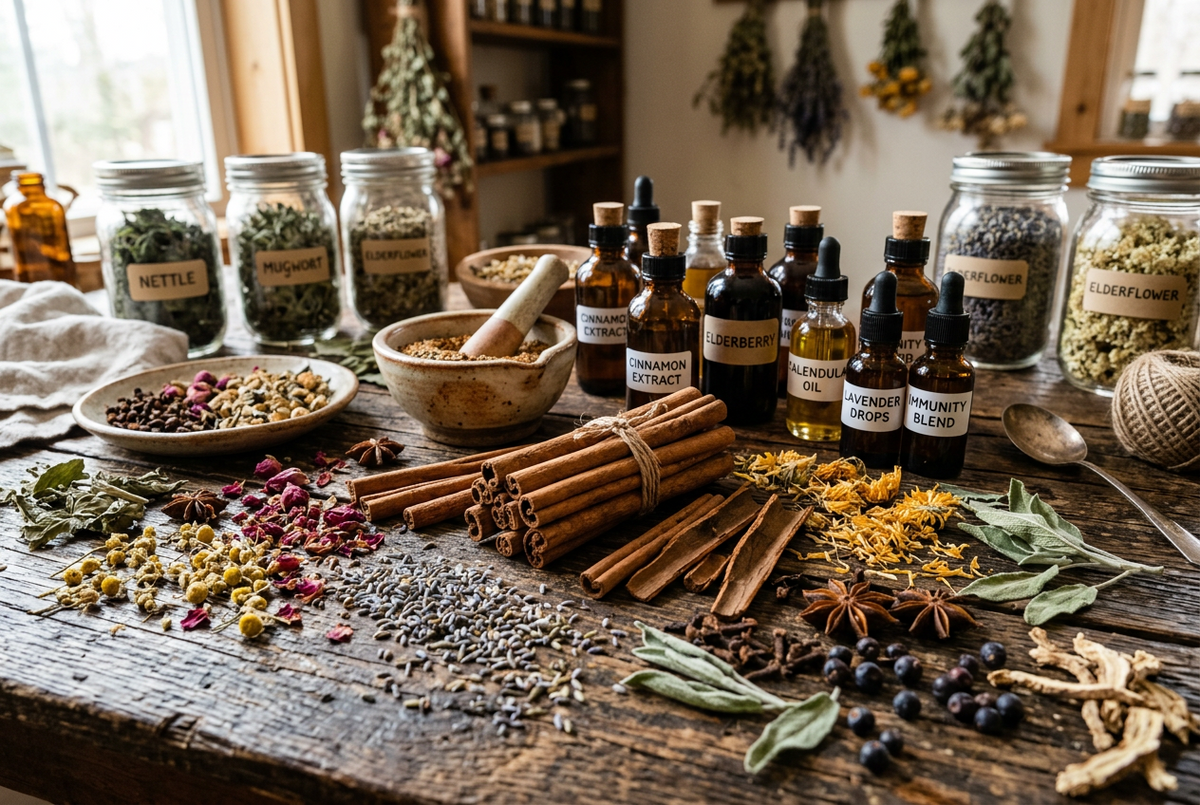
In herbal medicine, cinnamon (Cinnamomum verum or Cinnamomum cassia) is considered a warming, aromatic herb with a long history of use in Ayurvedic, Traditional Chinese, Western, and folk herbal traditions.
Common traditional uses include:
- Supporting healthy blood sugar metabolism: Cinnamon is often used as an adjunct herb to help maintain healthy glucose regulation, particularly when combined with diet and lifestyle measures.
- Circulatory support: Traditionally used to promote peripheral circulation and warm cold hands and feet.
Ayurveda: In Ayurveda, cinnamon is called Tvak and is considered:
- Warming and stimulating
- Beneficial for balancing Vata and Kapha
- Useful when digestion (agni) is weak
- Commonly added to formulas for sluggish metabolism, coldness, excess mucus, and impaired circulation
Safety Considerations
- Culinary amounts are generally well tolerated for most adults.
- Cassia cinnamon contains higher levels of coumarin, which may pose concerns with long-term high-dose use, especially in people with liver disease.
- Cinnamon may enhance the effects of blood sugar-lowering medications, so caution is advised for those taking diabetes medications.
Cinnamon is often best described as a warming digestive and circulatory tonic that supports metabolic health and healthy blood sugar balance while enhancing the flavor and compliance of herbal formulas.
Compiled by M. Raven Sponaugle using Copilot.
Share