New arrivals,
ancient wisdom
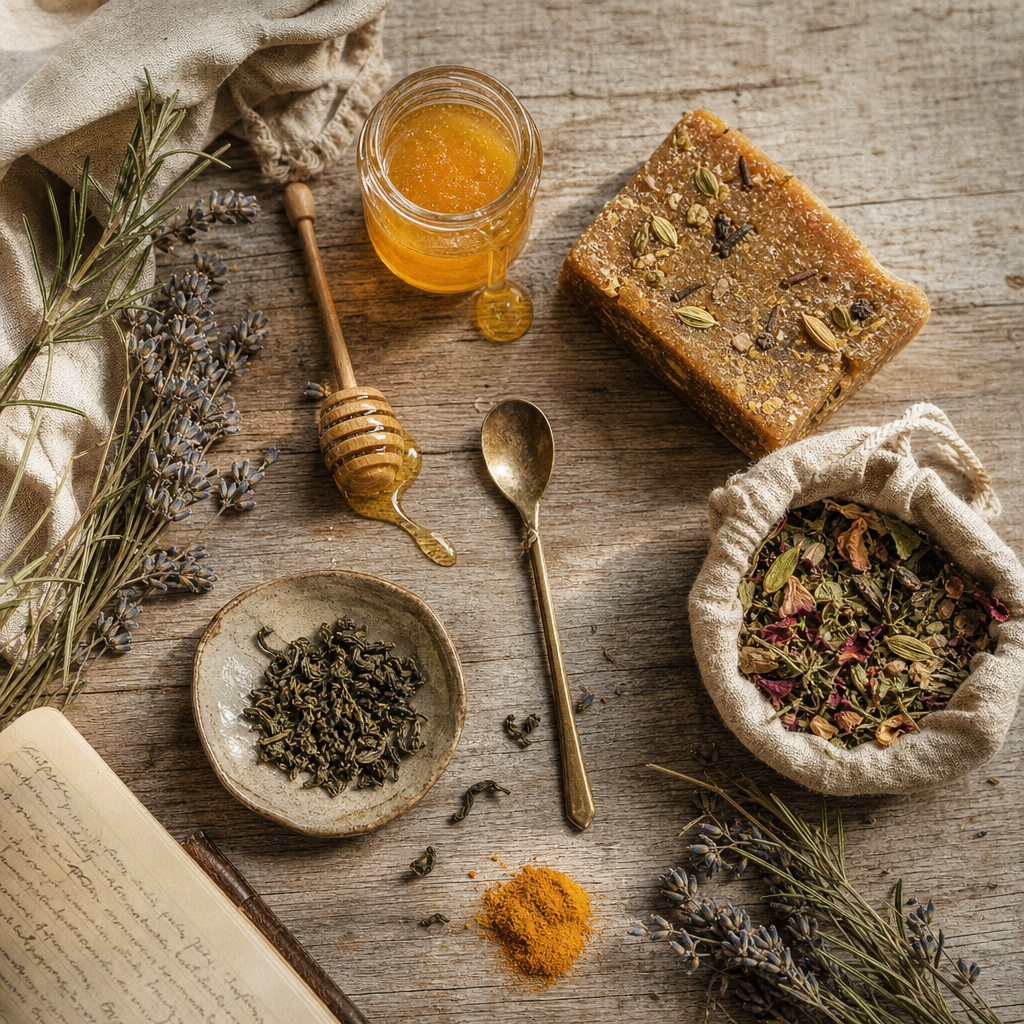
The shop has been busy these past weeks. Tea harvests have arrived from Darjeeling, a jar of jaggery came in from a small Indian producer, and we finally got our hands on the apothecary spoon we’ve been hunting for. Five new arrivals this week — humble in price, generous in tradition.
Pour a cup, light something fragrant, and read on.
The Honey Jar Clover Honey Sticks

Sometimes the smallest thing on the shelf is the most thoughtful one. These pure clover honey sticks slip into a teacup, a lunchbox, a hiking pocket — a single perfect dose of pure raw sweetness, no spoon required. From the family-owned Honey Jar, sourced from clover-rich pastures, sealed by hand. Penny-priced and quietly delightful.
In Ayurveda, honey (Madhu) is uniquely classified as Yogavahi — a substance that carries and amplifies the properties of whatever it is combined with, which is why it has been the preferred vehicle for herbal medicines for millennia. Raw honey is considered tridoshic in moderation, with a particular gift for soothing the throat, the lungs, and excess Kapha. Clover itself (Trifolium pratense) is a classical Western herbal alterative — a lymphatic mover, gentle on the system, traditionally taken in syrups and tisanes. A honey stick from clover pasture is, by lineage, a humble piece of medicine.
Magic Tea Spoon — Apothecary & Herb Spoon

A small, elegant apothecary spoon designed for loose-leaf tea and dry herbs — the kind of tool that turns brewing into ritual. Slim enough to dip into a tincture bottle, deep enough to scoop a heaping spoonful of dried tulsi or chamomile. Two dollars buys you something that will sit on your counter for years and quietly improve every cup you make.
In both Ayurvedic and Western folk herbalism, the preparation of a remedy is part of the remedy. The careful measuring of an herb, the attention paid to the dose, the quiet moment before brewing — these are not incidental. Ayurveda calls this sankalpa, the intention set at the beginning of an action; village herbalists have always known it simply as care. A dedicated spoon, used only for your herbs, is the kind of tool that turns a daily cup of tea into a small daily medicine, regardless of what you put in it.
Ayurvedic Jaggery — Infused with Spices & Herbs (Limited Edition)

Unrefined cane sugar, slow-cooked into dense golden cakes and stirred together with traditional Ayurvedic spices and herbs. A limited-edition import from a small Indian producer, this is what sugar looked like before sugar became sugar. Stir a piece into warm milk at bedtime, melt it into a chai, or simply nibble after a meal as the Indian grandmothers have always recommended. Mineral-rich, warming, and unmistakably whole.
Jaggery — Guda in Sanskrit — holds a venerable place in the Ayurvedic kitchen as a warming sweet that builds tissue rather than depleting it. Unlike refined sugar (which is considered drying and Vata-aggravating), unrefined jaggery retains its iron, potassium and trace minerals; it is classified as nourishing to the Rasa and Rakta dhatus (plasma and blood) and is a traditional support for Ojas, the subtle essence of vitality. Infused with classical digestive spices — the warming carminatives Ayurveda has always paired with sweets — this version is the time-tested answer to the question of how to enjoy sweetness without surrendering balance.
Mediteation Loose-Leaf Herbal Tea, Certified Organic (2 oz)

A loose-leaf blend put together for the moments before sitting down to meditate — quieting, clarifying, gentle on the nervous system. Certified organic, caffeine-free, and packaged in a 2 oz pouch that will get you through a few weeks of practice. Steep a small pot, breathe in once before drinking, and let the cup do part of the work.
Ayurveda calls foods and herbs that quiet the mind without dulling it sattvic — clarity-bringing, harmonizing, supportive of the contemplative faculties. The classical Ayurvedic medhya rasayanas (mind-supporting tonics — tulsi, brahmi, jatamansi, gotu kola) are precisely the herbs that show up in well-made meditation blends; they pacify Vata, soothe an overactive nervous system, and encourage sattva over rajas. In Western herbalism the same family of plants is called nervines — soothing, restorative companions for anyone trying to come back into themselves. Brewed slowly and with intention, a cup like this is half tea, half preparation for the silence that follows.
Darjeeling Green Tea — Certified Organic (4 oz)

From the high gardens of the Darjeeling Himalayan foothills — the “champagne of teas,” in its lesser-known green form. Lightly oxidized, certified organic, and bright in the cup: muscatel notes, a pale gold pour, and a finish that feels somehow both bracing and gentle. Four ounces of loose leaf, enough for many quiet mornings.
In Ayurvedic energetics, green tea (Camellia sinensis, minimally oxidized) is read as bitter and astringent in taste, light in quality, and slightly cooling — properties that make it a natural Kapha-pacifier and a gentle ally for Pitta when taken in moderation. Its catechins (especially EGCG) are among the most thoroughly studied plant antioxidants in modern science; in the older language of herbalism we would simply call green tea a clarifier and a mover — sharpening focus, supporting healthy digestion, and warming the body without overheating it. The Darjeeling growing region, at elevation in the Himalayan foothills, produces leaves with a particular brightness that traditional tea-drinkers have always paired with morning sadhana.
and it’s been waiting for you.”
Raven & the team at Townsend Draft Goods
Our newsletter was composed using Claude.
10677 Mill Gap Rd. · Info@TownsendDraftGoods.com
Free shipping on orders $50+ · Local pickup always free