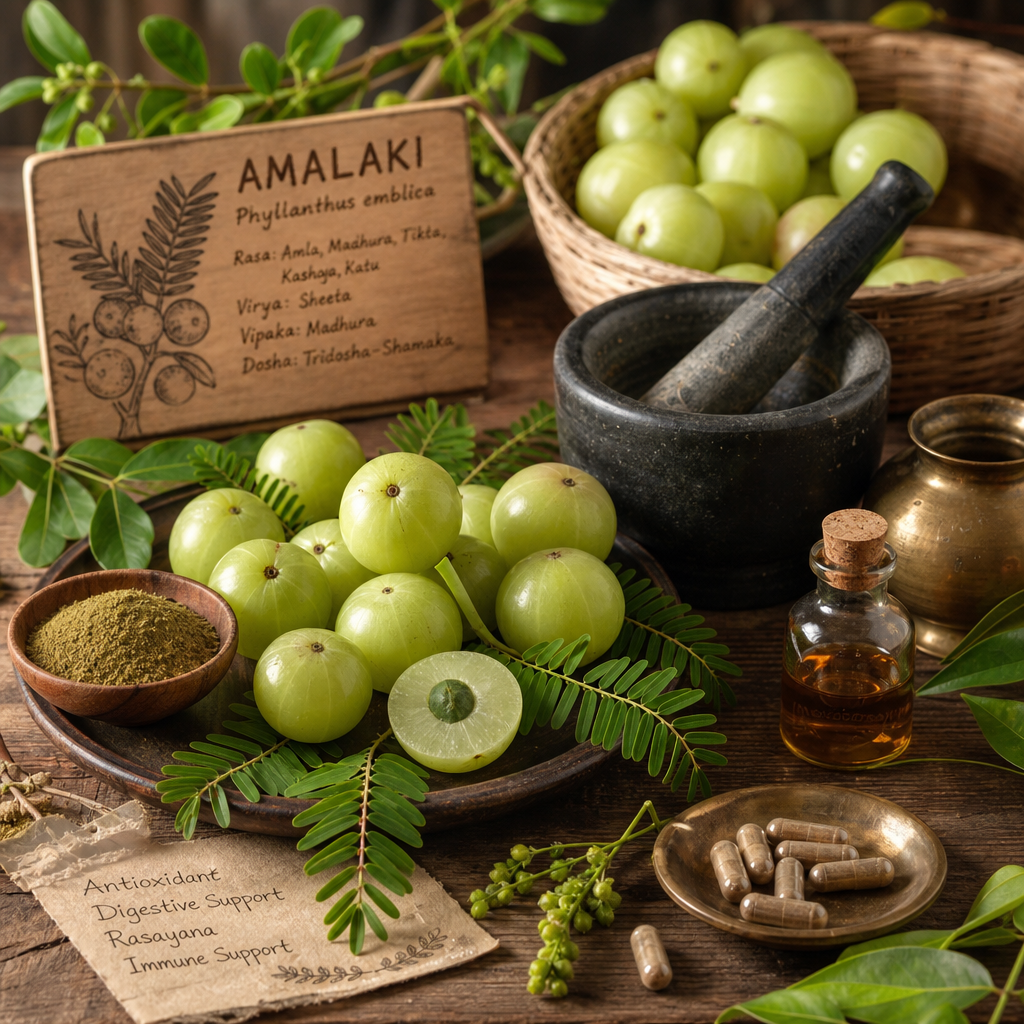
Amla (Phyllanthus emblica), also known as Indian gooseberry or Amalaki, is a traditional Ayurvedic fruit valued for its antioxidant activity, digestive support, and nutrient density. In Ayurveda, it is considered a rasayana, meaning it supports overall vitality and healthy aging (Baliga & Dsouza, 2011).
FDA Disclaimer: These statements have not been evaluated by the Food and Drug Administration. This product is not intended to diagnose, treat, cure, or prevent any disease.
Key Wellness-Supportive Actions (Structure/Function Language)
Antioxidant Support
Amla contains high levels of vitamin C and polyphenols, which help protect cells from oxidative stress and support overall cellular health (Baliga & Dsouza, 2011; Saini et al., 2022).
Digestive & Gut Support
Traditionally used to support healthy digestion, Amla helps maintain balanced digestive fire (agni) without excess heat. Its natural fiber content supports regularity and healthy elimination (Saini et al., 2022).
Metabolic & Nutrient Support
Amla supports healthy metabolic function and nutrient absorption, including enhanced iron absorption due to its vitamin C content (Sarkar & Mandal, 2021).
Immune System Support
Its vitamin C and antioxidant profile help maintain normal immune function and overall resilience (Baliga & Dsouza, 2011).
Skin, Hair & Connective Tissue Support
Amla supports collagen formation and healthy connective tissues. In traditional use, it nourishes hair follicles and supports healthy skin tone (Sarkar & Mandal, 2021).
Eye & Vision Support
Amla contains carotenoids and vitamin C, which help maintain normal eye function and support healthy vision (Saini et al., 2022).
Emotional & Cognitive Support (Ayurvedic Perspective)
In Ayurveda, Amla is considered mildly medhya, meaning it supports clarity and balanced mental function.
Ayurvedic Properties
- Rasa (Taste): Sour, sweet, pungent, bitter, astringent (five of six tastes)
- Virya (Energy): Cooling
- Vipaka (Post-digestive effect): Sweet
- Dosha Effects: Tridoshic; especially balancing for Pitta
- Dhatus Supported: Rasa, rakta, mamsa, asthi, majja, shukra
- Srotas: Supports digestive, circulatory, and reproductive channels
Common Preparations
- Fresh fruit or juice
- Powder (churna)
- Triphala blends
- Herbal jams (e.g., chyawanprash)
- Infused oils for hair and skin
- Capsules or tablets

Safety & Considerations
- May influence blood sugar; individuals using glucose‑lowering medications should consult a healthcare provider.
- May have mild anticoagulant effects; use caution before surgery or with blood‑thinning medications.
- Sour fresh fruit may aggravate Vata if used excessively.
References
Baliga, M. S., & Dsouza, J. J. (2011). Amla (Emblica officinalis Gaertn), a wonder berry in the treatment and prevention of cancer. European Journal of Cancer Prevention, 20(3), 225–239.
Saini, R., Sharma, S., Choudhary, R., & Saini, S. (2022). Phyllanthus emblica (Amla): A review of its phytochemistry, traditional uses, and health‑promoting effects. Journal of Pharmacognosy and Phytochemistry, 11(1), 45–52.
Sarkar, D., & Mandal, S. (2021). Nutritional and therapeutic potential of Indian gooseberry (Emblica officinalis). Journal of Food Biochemistry, 45(2), e13584.
Composed by M. Raven Townsend with Copilot
(For general wellness education; not intended to diagnose, treat, cure, or prevent disease.)