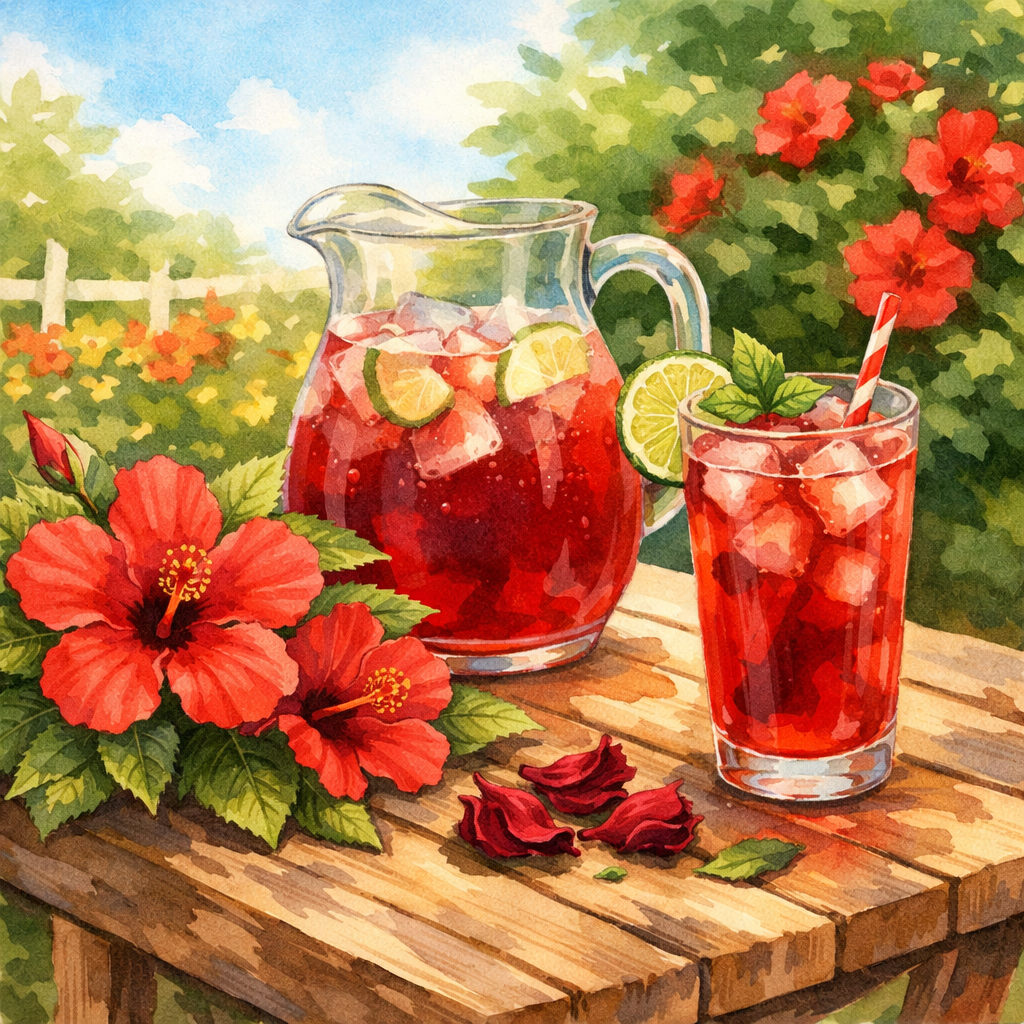
Hibiscus tea, made from the calyces of Hibiscus sabdariffa, is valued in both Ayurveda and Western herbalism for its cooling, soothing nature and its ability to support overall well‑being.
Cooling to the Body
In Ayurveda, hibiscus is considered sheetala (cooling) and pitta‑pacifying, traditionally used to maintain comfortable digestion, support a calm mind, and promote a sense of internal balance during hot seasons or periods of intensity (Pole, 2013). Herbalists appreciate hibiscus for its naturally tart, antioxidant‑rich profile, which is associated with supporting healthy circulation and helping the body maintain resilience against everyday oxidative stress (McIntyre & Boudin, 2019). Its vibrant color and aromatic acidity are also traditionally used to encourage gentle digestive comfort and hydration.
Hibiscus Tea
As a daily beverage, hibiscus tea offers a refreshing way to support general wellness. It can be enjoyed hot or cold, blended with herbs like mint or tulsi for added balance, or incorporated into wellness routines as a caffeine‑free alternative to stimulate the senses without overstimulation.

Because hibiscus is naturally rich in plant acids and polyphenols, many people use it to support a feeling of lightness and clarity throughout the day (Cohen, 2014). When prepared as a simple infusion, iced tea, or combined with spices in a cooling summer blend, hibiscus provides a flavorful, tradition‑rooted option for maintaining everyday vitality.
Townsend Draft Goods offers pure Hibiscus at https://townsenddraftgoods.com/products/nelsons-tea-hibiscus-herbs.
References
Cohen, M. M. (2014). Hibiscus sabdariffa: Traditional uses, phytochemistry, and health-supportive properties. Journal of Herbal and Integrative Medicine, 3(2), 45–52.
McIntyre, A., & Boudin, A. (2019). Herbal medicine: A complete guide. Gaia Books.
Pole, S. (2013). Ayurvedic medicine: The principles of traditional practice. Singing Dragon.
By M. Raven Townsend using copilot.