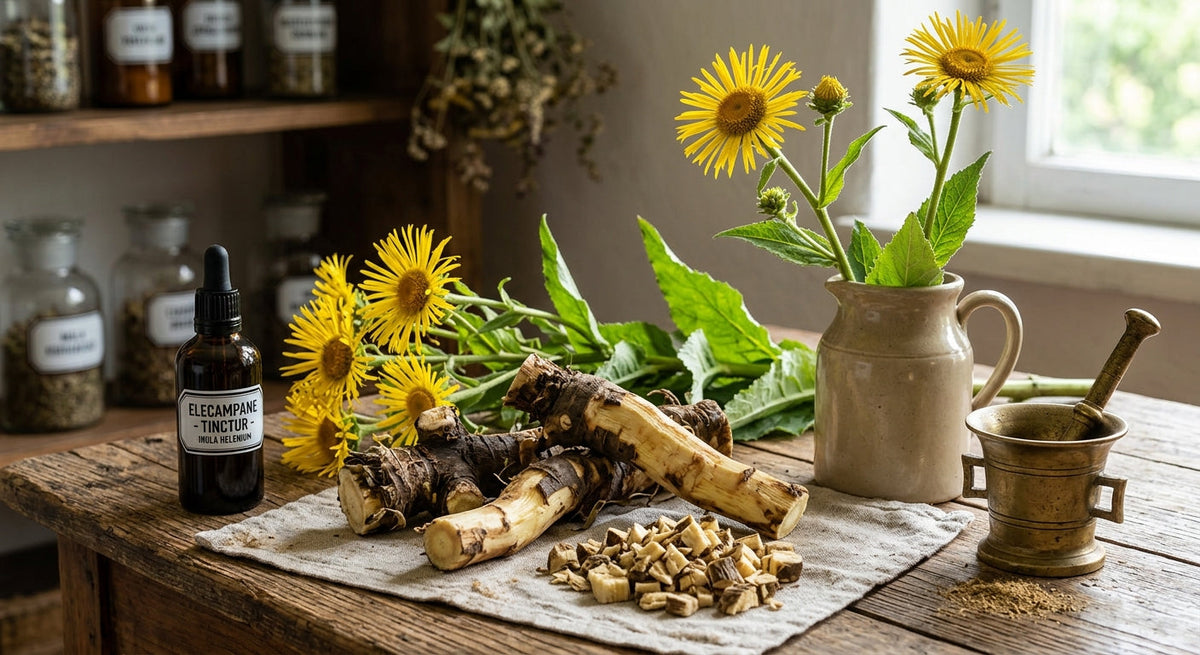
Elecampane (Inula helenium) is historically and traditionally regarded as one of the premier herbal remedies for the lungs and respiratory system. It is deeply valued in Western herbalism for supporting lung function, particularly when dealing with excess moisture, heavy congestion, and deep-seated coughs.
The primary ways elecampane benefits the lungs include:
1. Acting as a Stimulating Expectorant
Elecampane is most famous for breaking up and clearing "boggy," damp mucus from the chest.
Clears Stagnant Phlegm: It is traditionally used for wet, heavy coughs where mucus feels stuck, stubborn, or difficult to cough up.
Stimulates Clearance: Rather than just suppressing a cough, its warming volatile oils (like alantolactone and inunolide) stimulate the respiratory tract to help the body effectively expel trapped phlegm and clean out the bronchial tubes.
2. Soothing and Relaxing Bronchial Airways
Antispasmodic Properties: The acrid and bitter components in the root give it a mild relaxant effect on smooth muscle tissue. This helps ease spasms in the bronchial tubes, making it useful for easing shortness of breath and calming paroxysmal or hacking coughs.
Calming Airway Inflammation: Preclinical and lab studies suggest that active constituents in elecampane can help reduce airway inflammation, making it a subject of interest for chronic inflammatory respiratory conditions.
3. Providing Antimicrobial Support
Elecampane root is rich in aromatic compounds that exhibit natural antimicrobial properties. Historically, it was heavily relied upon for deep chest infections, bronchitis, and even tuberculosis because it helps the body fight off unwanted microbial invaders in the respiratory tract.
Key Considerations
Best Suited For "Cold, Damp" Conditions: Herbalists typically recommend elecampane when a condition feels cold, sluggish, and heavy (excess fluid, thick white or yellow mucus, and a chilled feeling). It is generally not recommended if a cough is entirely dry, hot, and irritated.
Forms Used: It is commonly prepared as a hot decoction (tea), a liquid tincture, or a herbal syrup.
Precautions: Because it can act as a uterine stimulant, elecampane is typically avoided during pregnancy. Individuals with allergies to plants in the Asteraceae family (like ragweed or daisies) should also exercise caution.
(Note: Always consult with a healthcare professional or a qualified clinical herbalist before adding strong herbal supplements to your routine, especially if you have pre-existing lung conditions like asthma or COPD.)
Composed using Gemini
Share