I asked Google, "What does teasel root do?" And this is the response:
Teasel root (Dipsacus spp.) is a traditional herbal remedy primarily used to support musculoskeletal health by strengthening bones, tendons, and ligaments, and treating chronic pain, particularly in the back and knees. It is often used to treat Lyme disease symptoms, promote circulation, and aid in injury recovery. [1, 2, 3]

Key Uses and Benefits:
- Musculoskeletal Health: Used to alleviate pain, stiffness, and strengthen tendons, bones, and joints.
- Lyme Disease: Frequently used by herbalists to treat symptoms associated with Lyme disease, potentially helping with joint pain.
- Traditional Chinese Medicine (Xu Duan): Known to strengthen the liver and kidneys, improve circulation, and treat injuries.
- Other Potential Uses: Used for repairing fractures, treating rheumatism, and addressing issues related to pregnancy, such as reducing the risk of miscarriage.
- External Application: Applied topically as a tincture or wash to treat skin conditions, including warts, bruises, and sores. [1, 2, 3, 4, 5, 6, 7]
Forms and Precautions:
- Forms: Available as tinctures, capsules, and dried roots for tea.
- Precautions: Consult a healthcare professional before use, especially if pregnant, nursing, or taking other medications. [1, 3, 8]

Teasel root is considered a "bitter tonic" that is warming and stimulating. While rooted in traditional medicine, more, particularly clinical, research is needed to verify these benefits. [9, 10]
AI can make mistakes, so double-check responses
Teasel and Milk Thistle Are NOT the Same nor are They Related
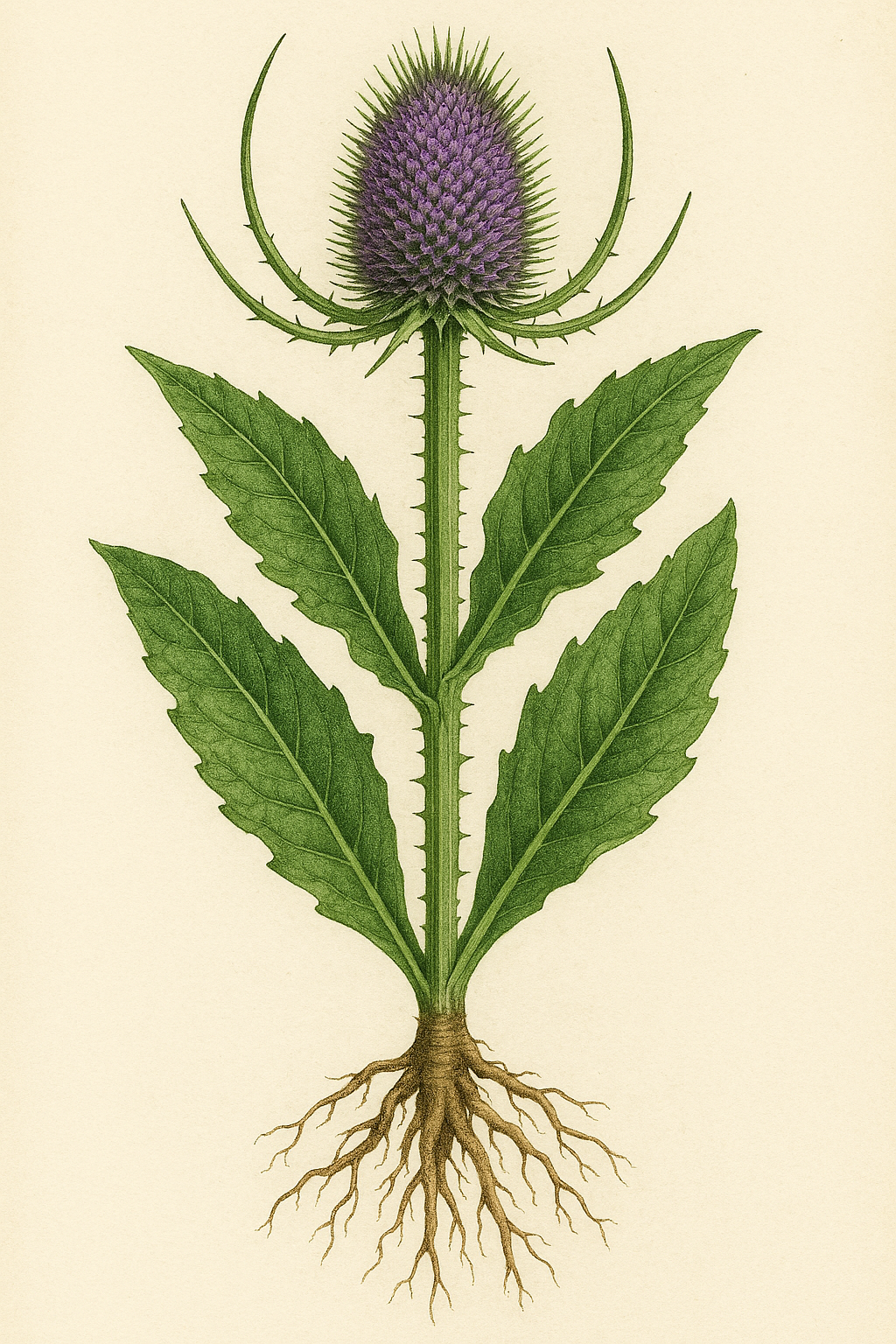
Teasel (Dipsacus spp.) and milk thistle (Silybum marianum) are not closely related, despite their similar spiny appearance and shared preference for disturbed, sunny habitats. They belong to different plant families: teasel is in the Dipsacaceae (or Caprifoliaceae) family, while milk thistle is in the Asteraceae (daisy) family. [1, 2, 3, 4]

Key Differences:
- Family: Teasel (Dipsacaceae) vs. Milk Thistle (Asteraceae/Daisy).
- Appearance: Teasel has distinctive, large, egg-shaped, spiny flower heads. Milk thistle has white-veined, prickly leaves and traditional thistle-like purple, spiny flowers.
- Structure: Teasel leaves are opposite, whereas true thistles generally have alternate leaves.
- Uses: Both are used in traditional medicine, but for different purposes (teasel is often used for joint pain/Lyme support, while milk thistle is famously used for liver health). [1, 2, 4, 5, 6]
AI can make mistakes, so double-check responses
Share